7 Big Mistakes Foreigners Make When Picking a Chinese Name (And How to Avoid Them)
Discover the most common pitfalls foreigners face when choosing a Chinese name and learn expert strategies to select an authentic, culturally appropriate name that reflects your identity while respecting Chinese traditions.
Choosing a Chinese name isn't just about translation—it's about cultural respect and authentic connection. Whether you're working in Shanghai, studying in Beijing, or building relationships with Chinese communities, the right name opens doors and builds trust. The wrong one? It can lead to embarrassment or even offense.
Many foreigners unknowingly make critical mistakes when selecting their Chinese name—from cultural misunderstandings to unfortunate homophones. In this guide, we'll explore the seven most common pitfalls and show you exactly how to avoid them, so you can choose a name that's authentic, appropriate, and truly represents you.
Quick Solution: Use our Chinese Name Translator to find a culturally appropriate name, or read on for detailed explanations below.
Table of Contents
- Mistake 1: Stereotypical Syllables
- Mistake 2: Homophones & Hidden Meanings
- Mistake 3: Historical Names
- Mistake 4: Gender Conventions
- Mistake 5: Naming Taboos
- Mistake 6: Literal or Cute Names
- Mistake 7: Pronunciation & Practicality
- Quick Checklist
Mistake 1: Falling for Stereotypical "Chinese-Sounding" Syllables
One of the most pervasive pitfalls is clinging to syllables like “Shang,” “Chang,” or “Zhang” under the assumption that they sound “authentically Chinese.” This trend, perpetuated by Hollywood films and outdated media portrayals, not only lacks creativity but also carries problematic connotations.
As international superstar Donnie Yen pointed out during the filming of John Wick: Chapter 4, foreign directors often default to names like "Shang" or "Chang" for Chinese characters, reinforcing harmful stereotypes.
More importantly, these syllables echo the offensive "Ching Chang Chong" mockery used to degrade Chinese immigrants for over a century. Coined during the 1800s to mock Cantonese-speaking railroad workers, this phrase remains a painful reminder of anti-Chinese discrimination. By choosing names like "Chang" or "Shang," you risk unconsciously perpetuating these harmful stereotypes and signaling ignorance of Chinese cultural sensitivity.
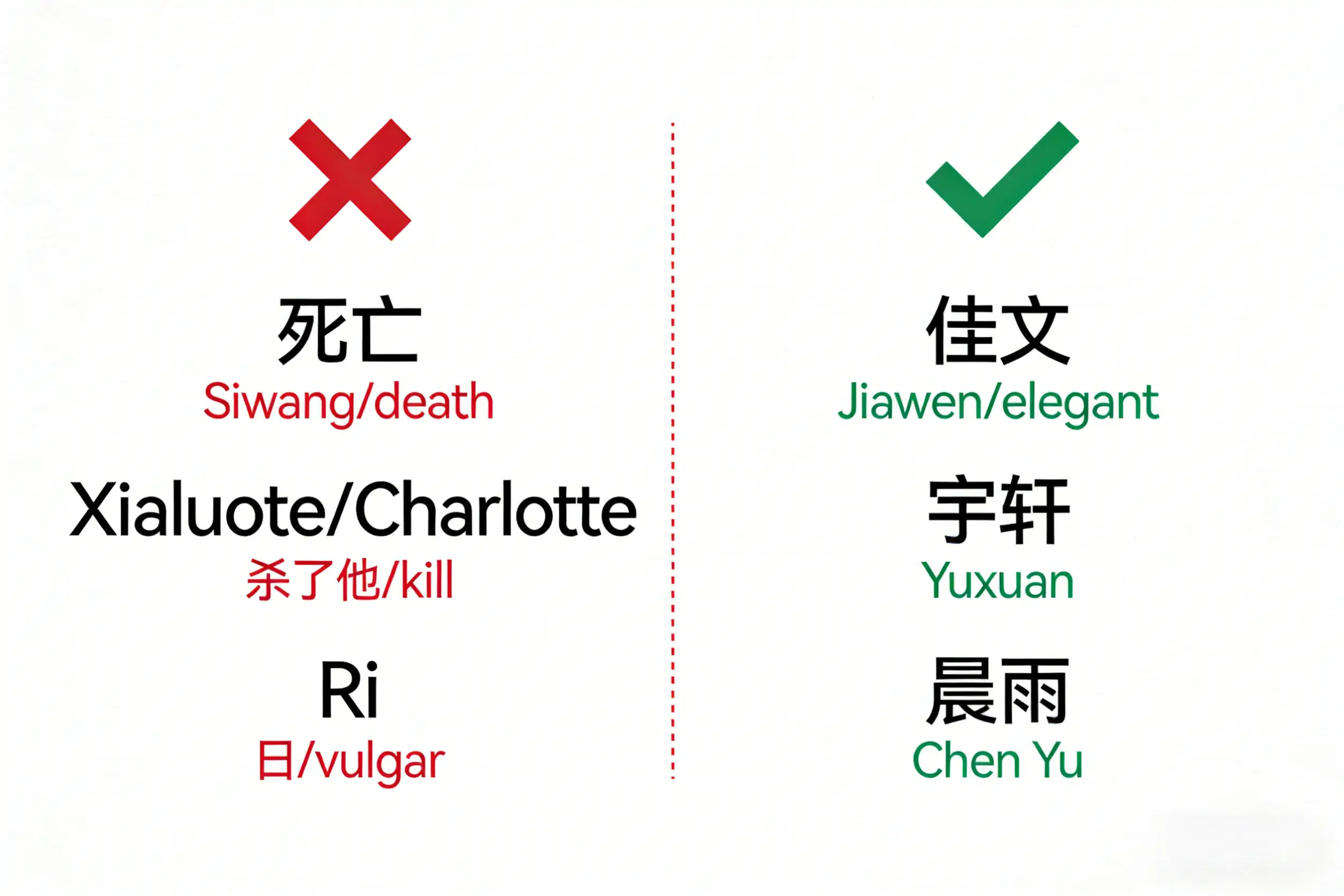
A far better approach is to move beyond these overused syllables and explore the rich diversity of Chinese phonetics—names like “Jiawen” (elegant and cultured), “Yuxuan” (jade-like grace), or “Zirui” (auspicious wisdom) are not only melodic but also free of harmful associations.
Mistake 2: Ignoring Homophones and Hidden Negative Meanings
Chinese is a language rich in homophones—words that sound identical but have vastly different meanings—and this complexity is a minefield for unsuspecting foreigners. Many make the mistake of combining characters based solely on sound or literal translation, unaware that their chosen name may carry unintended and even offensive connotations.
For example, the characters “Si” (to think) and “Wang” (prosperous) might seem like a winning combination, but together they sound nearly identical to “Siwang,” the Chinese word for “death.” Another cringe-worthy example is the name “Xialuote,” a direct transliteration of “Charlotte.” While it seems harmless, its pronunciation (“sha le ta”) closely resembles the phrase “kill him/her” in Mandarin—hardly the impression you want to make.
Even individual characters can be problematic: "Ri" literally means "sun," but in colloquial usage, it's a vulgar expletive similar to "fuck." To avoid this, never rely on literal translations or automated tools alone. Always consult a native speaker or Chinese language expert to ensure your name's sound and characters don't accidentally evoke negative associations.
Mistake 3: Adopting Names of Historical or Cultural Icons (Without Context)
It’s tempting to borrow names from Chinese history, literature, or mythology—after all, figures like Li Bai (the great Tang poet) or Zhuge Liang (the legendary strategist) carry immense cultural cachet. However, this practice often backfires, as these names are deeply revered and not intended for casual use by foreigners.
Imagine a Chinese person moving to the West and naming themselves “Jesus” or “Shakespeare”—it would feel disrespectful and out of place. Similarly, using names like “Zheng Chenggong” (a national hero who reclaimed Taiwan) or “Wang Yangming” (a revered philosopher) can come across as presumptuous or even offensive.
The same goes for fictional characters: naming yourself “Tang Bohu” (a famous scholar from Chinese opera) might seem whimsical, but it risks making you appear as a caricature rather than someone who respects Chinese culture. Even well-intentioned choices can misfire—Israeli former ambassador Matan Vilnai adopted the name “Ma Teng” after learning it belonged to an ancient Chinese general, but the name feels jarringly archaic in modern contexts.
Instead of co-opting historical names, draw inspiration from their virtues: if you admire Li Bai's creativity, choose a name with characters like "Wen" (literature) or "Hao" (heroic spirit) that reflect those qualities without appropriating his identity.
Need Help? Choosing a culturally appropriate name can be tricky. Our Chinese Name Translator analyzes your preferences and suggests meaningful options in seconds. Try it now!
Mistake 4: Disregarding Gender-Specific Naming Conventions
Chinese names often carry subtle but clear gender cues, and ignoring these can lead to confusion or even mockery. Unlike Western names where unisex options are common, Chinese given names typically use characters associated with masculinity or femininity.
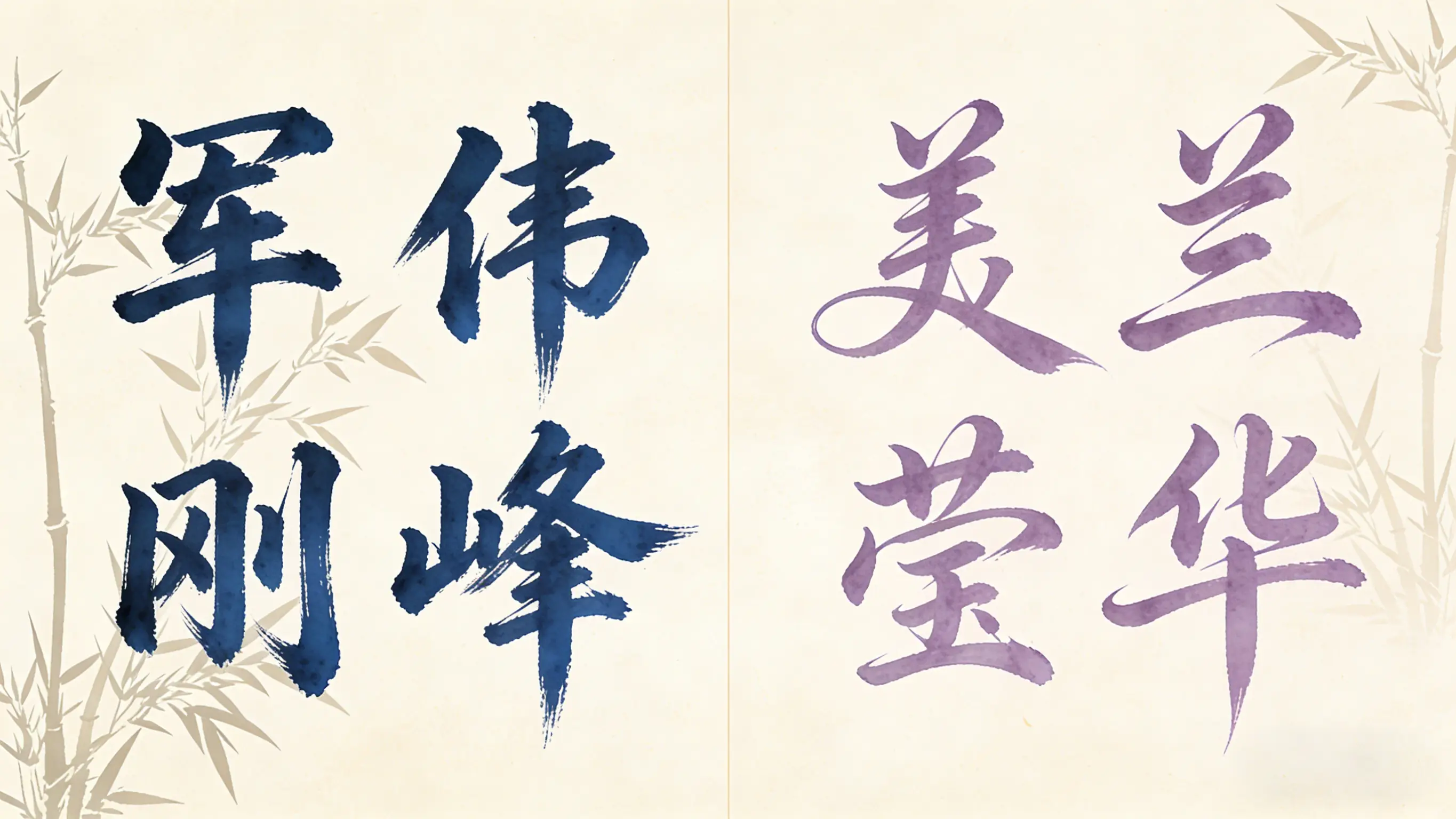
For example, male names often include characters like "Jun" (军, military), "Wei" (伟, great), or "Gang" (刚, strong), while female names frequently feature "Ying" (莹, elegant), "Lan" (兰, orchid), or "Hua" (花, flower).
| Typical Male Characters | Meaning | Typical Female Characters | Meaning |
|---|---|---|---|
| 军 (Jun) | Military | 美 (Mei) | Beautiful |
| 伟 (Wei) | Great | 兰 (Lan) | Orchid |
| 刚 (Gang) | Strong | 华 (Hua) | Flower |
| 峰 (Feng) | Peak | 莹 (Ying) | Lustrous |
A foreign woman with the given name "Qiang" (强, meaning "strong") might find herself constantly correcting people's gender assumptions, as this character is typically used in male names like "Wang Junqiang" (王军强). Similarly, a man named "Li Meihua" (李美花, "Beautiful Flower Li") could face teasing for having a traditionally feminine name.
This isn't just a matter of tradition—gender-appropriate names help others interact with you more comfortably. Of course, there are exceptions, and some modern Chinese parents choose unisex names, but these are still relatively rare. When in doubt, opt for characters that align with your gender identity and consult native speakers to ensure your name doesn't send mixed signals.
Mistake 5: Overlooking Naming Taboos and Hierarchical Respect
Chinese culture has strict naming taboos rooted in Confucian values of respect for elders and ancestors—taboos that many foreigners are unaware of. In traditional Chinese families, it’s considered deeply disrespectful to use a character from an elder’s name, even if it’s just one syllable.
This taboo extends to historical figures and rulers: during the Qing Dynasty, writers had to omit strokes from the emperor’s name to avoid offending the throne, and violating this rule could result in execution. While modern society is more lenient, the core principle remains: names should not invoke the names of ancestors, elders, or revered figures.
Another often-overlooked taboo is the use of numbers with negative connotations. The number 4 is universally avoided because its pronunciation (“si”) sounds like “death,” while “250” (“er bai wu”) is a well-known insult meaning “fool.” Even seemingly harmless numbers can cause issues—using “2” in a name might be interpreted as calling someone “stupid” in northern China.
To navigate these taboos, avoid numbers in your given name and steer clear of characters that appear in the names of people you respect or historical figures. When in doubt, ask a Chinese friend about their family’s naming traditions—this not only avoids mistakes but also shows genuine interest in their culture.
Mistake 6: Choosing Names That Are Too Literal or "Cute"
Many foreigners fall into the trap of choosing names with overly literal or cutesy meanings, mistakenly believing they’re charming or memorable. For example, “Caihua” literally means “picking flowers,” but in Chinese slang, it’s a euphemism for “rape”—a deeply disturbing association.
Similarly, names like “Wangcai” (“prosperous wealth”) or “Tiezhu” (“iron pillar”) are traditionally used for pets or as nicknames for children, not for adults in professional or social settings. Even names that seem innocent in English can translate poorly: a foreigner named “Happy” might choose “Kaixin” (the direct translation), but this name feels childlike and unprofessional to Chinese ears.
The key is to balance meaning with maturity—Chinese names often convey virtues like integrity, wisdom, or kindness through subtle, poetic language, not blunt literalism. For inspiration, look to the Chinese name of the American sinologist Frederick Mote: “Mou Fuli” (牟复礼). It pairs “Mou” (牟, a transliteration of his surname Mote) with “Fuli” (复礼, from Confucius’ teaching on “restraining oneself and restoring ritual propriety”). A name like this is meaningful, sophisticated, and respectful of Chinese naming conventions.
Mistake 7: Forgetting to Consider Pronunciation and Practicality
A beautiful Chinese name is useless if no one can pronounce it—or if you can’t say it yourself. Many foreigners choose names with complex tones or difficult-to-pronounce characters, leading to constant mispronunciations and frustration.
Chinese is a tonal language, and a single character can have multiple meanings depending on its tone—mispronouncing a tone can completely change your name’s meaning. For example, “Ma” with the first tone means “mother,” while with the third tone, it means “horse.”
Additionally, characters with rare or complicated strokes (like “Long” 龍,meaning “dragon,” which has 16 strokes) can be difficult for others to write, leading to misspellings on documents or business cards. When choosing a name, prioritize simplicity and ease of pronunciation—opt for common characters with clear tones that you can confidently say and others can easily remember.
The best names strike a balance between meaning, sound, and practicality: for example, "Chen Yu" (晨雨, morning rain) is short, melodic, and easy to both pronounce and write.
Want to explore personalized name options? Try our Chinese Name Translator tool to discover culturally appropriate names based on your English name.
Conclusion: How to Choose a Chinese Name That Truly Represents You
Choosing a Chinese name is a journey that requires curiosity, respect, and attention to detail. It's not just about finding a translation—it's about selecting a name that honors Chinese culture while reflecting your unique identity.
Quick Checklist Before Finalizing Your Name
- Tested pronunciation with native speakers
- Checked for homophones and hidden meanings
- Avoided historical/celebrity names
- Followed gender conventions
- Respected naming taboos (no elder/ancestor names)
- Ensured meaning isn't overly literal or childish
- Confirmed it's easy to say and write
Your Next Steps
To choose your perfect Chinese name, follow these steps:
- Research common surnames like Li (李), Wang (王), Zhang (张), or Chen (陈)
- Work with native speakers or use our translation tool to craft a meaningful given name
- Draw inspiration from virtues like "Chenxi" (晨曦, morning light) or "Linfeng" (林峰, forest peak)
- Test your name with Chinese friends to ensure it sounds natural
Ready to Choose Your Perfect Chinese Name?
Now that you know the seven biggest pitfalls to avoid, you're equipped to make an informed choice. A great Chinese name isn't just about avoiding mistakes—it's about creating a bridge between cultures and showing genuine respect for Chinese traditions.
Want personalized help? Use our Chinese Name Translator to explore culturally appropriate options based on your personality and preferences, or consult with a native speaker to craft a name that reflects your unique identity.
Your Chinese name is an investment in relationships, respect, and opportunity. Choose wisely, and it will serve you for a lifetime.
